Small kitchens can be one of the trickiest spaces to design, especially if they also lack natural light. But “small and dark” doesn’t have to mean cramped and gloomy. With the right design choices, you can expand the feel of the room, bounce light around it, and create an inviting, airy space that feels far larger than its humble square footage.
From clever colour choices and reflective surfaces to practical layout tweaks, these are the design tricks that genuinely change how a kitchen feels – not just visually, but emotionally.
The Reality of Small Kitchens in UK Homes
In England and Wales, more than one in five households now live in flats, maisonettes or apartments, and the trend towards smaller, more compact homes is set to continue. After all, UK homes actually already have significantly less floor space per person than most other advanced countries, and rented homes (which are becoming more common) tend to be smaller than owner-occupied houses.
So, space is limited for many, and compact kitchens with little space and light are increasingly common.
At the same time, working from home has blurred the boundaries between living spaces. Kitchens have become multifunctional – a place to eat, work, chat, and cook – and if they feel dark or cramped, it affects every part of daily life.
That’s why design isn’t just about aesthetics anymore – it's about making your space work harder for you. Brightening and visually expanding a small or dark kitchen doesn’t just make it look nicer; it makes the room feel more usable, more welcoming, and more like home. And in a world where many of us spend more time at home than ever before, that feels like one of the most meaningful design decisions we can make.
So, let’s look at how you can make even the smallest, darkest kitchen feel spacious, light and truly inviting.
1. Embrace Light, Reflective Colours
One of the simplest and most effective changes you can make during a kitchen makeover is to change the colours in your kitchen.
Dark colours absorb light and pull spaces inwards. Light colours do the opposite – they bounce light around. Whites and soft neutrals feel fresh and expansive, but don’t feel limited to pure white. Instead, try:
Warm whites and creams
Pale greys and greiges
Soft pastels like blush, mint or powder blue
If you love colour but worry it might feel too intense, use it in moderation – like on lower cabinets or a feature island, and pair it with lighter walls or ceilings.
Why it works: Reflective paint and pale hues make walls feel as though they recede, visually enlarging the room, especially when paired with plenty of contrast in texture and tone.
2. Use Reflective Surfaces Everywhere
To fight darkness (sounds dramatic, we know), light must have surfaces to reflect off. Clever material choices act like mini boosters for every available ray of light. Try:
Glossy or semi-gloss cabinetry and tiles
Mirrored or glass splashbacks
Polished stone or quartz worktops
Stainless-steel or glass pendant lights
These surfaces create micro-reflections that make the whole space feel brighter.
Pro tip: Even a small piece of mirrored splashback or glass behind open shelving can visually widen the room.
3. Maximise Natural Light Even When It’s Limited
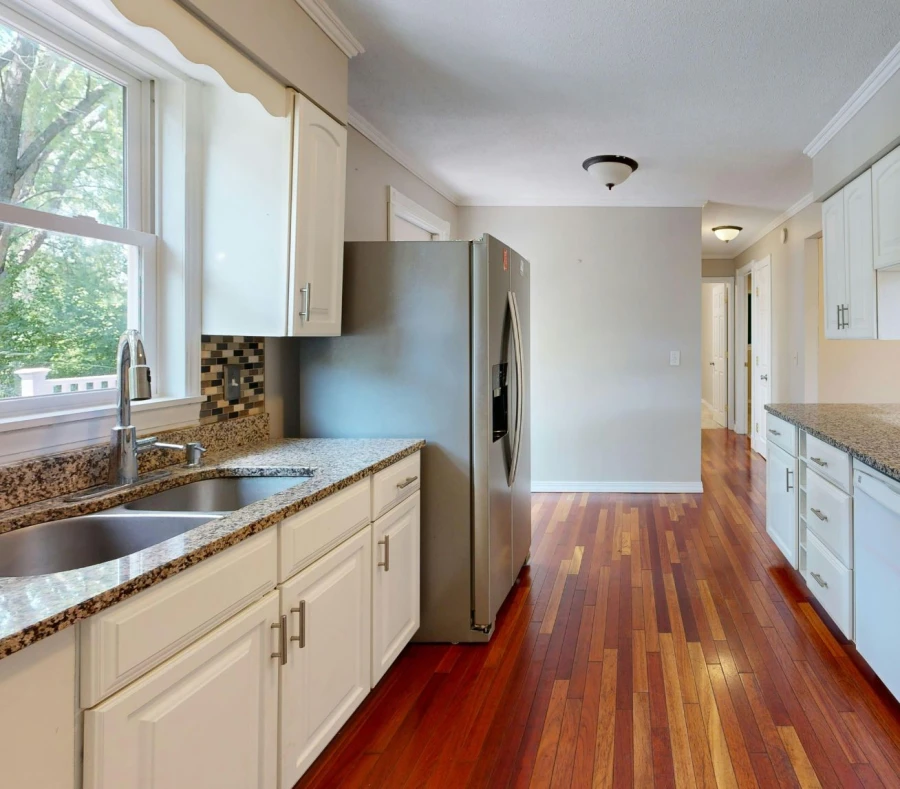
Not every kitchen has a big window, but there are still ways to make the most of what light you do have. Start simple – heavy curtains or dark blinds will only absorb precious daylight, so opt instead for sheer fabrics or light linen that soften the space without blocking the glow.
Also, think carefully about what sits around your window. Reflective surfaces, like a pale splashback or even a well-placed mirror, can help bounce light further into the room. The goal is to let daylight travel, rather than stop abruptly.
If at all possible, avoid placing tall cabinetry next to or opposite the window if it prevents light from spreading across the space. And if your window is on the smaller side, lean into it rather than hiding it with a fresh, bright trim colour, a clean sill and a clutter-free surround - this can transform it into a charming focal point rather than a small frustration.
Why it matters: Light follows a path. The less you interrupt that path, the more it will fill the room.
4. Rethink the Layout – Create Unbroken Sight Lines
A small kitchen feels even smaller when your eye keeps bumping into visual “stops.” Here are a few design tricks that help:
Choose open shelving in part of the kitchen instead of floor-to-ceiling cupboards
Keep tall cabinets to a minimum where possible
Use light or even glass-fronted cabinets to keep things feeling open
If you have an island, keep its lines clean and simple
The goal isn’t just physical space; it’s visual flow. Whether you’re standing at the sink or entering from another room, you want the eye to travel easily across the space without being interrupted.
5. Layer Your Lighting Strategically
Effective lighting isn’t just about brightness - it’s about where the light is placed. Think in layers:
Ambient light (general ceiling fixtures or recessed downlights)
Task light (under-cabinet strips or LED illumination for worktops)
Accent light (pendants over islands, sconce lighting, or plinth lighting)
Dark kitchens benefit hugely from under-cabinet lighting: it brings light right to your work surface, reducing shadows and making the space feel more functional and welcoming.
Top tip: We have plenty of kitchen lighting ideas to make your space feel brighter and bigger – check them out on our dedicated blog.
6. Mirror or Light-Tone Splashbacks
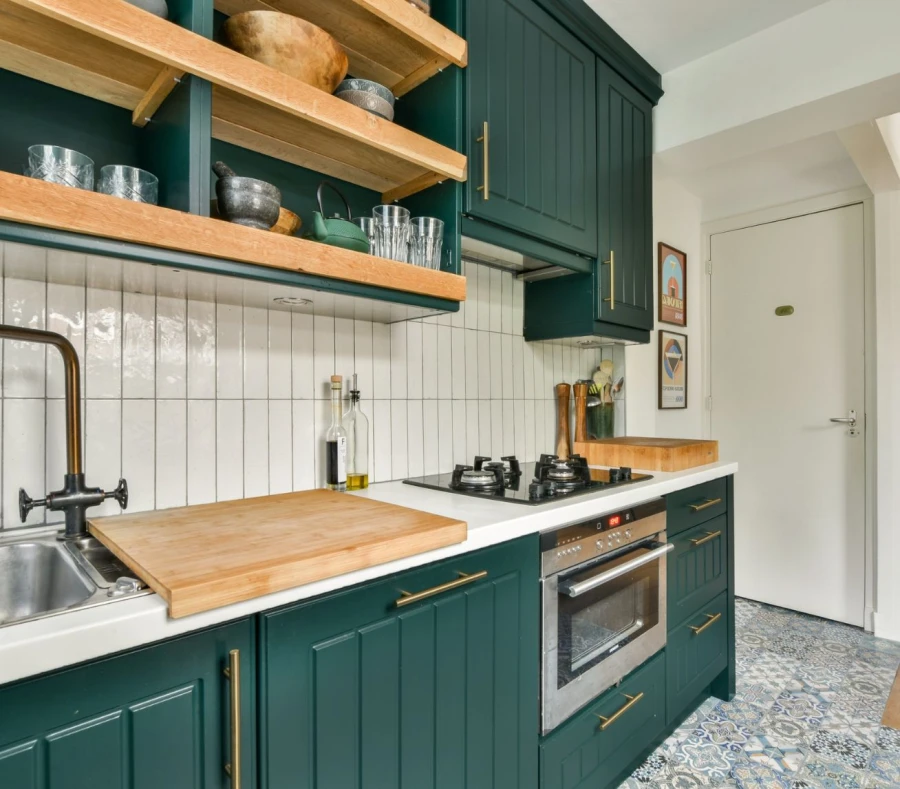
Splashbacks aren’t just functional; they’re visual tools that can accomplish a lot in a small kitchen. Here are the top options to consider:
Mirrored panels reflect light and visually expand your kitchen
Glass splashbacks bounce light while adding colour
Light ceramic tiles brighten the space without catching the eye too much
If you love patterned tile, use it behind the hob or just behind your kitchen sink - that’ll add enough character without overpowering the room.
7. Keep Floors Light and Uncluttered
Dark or heavily patterned floors can weigh down a small kitchen, while lighter flooring reflects more light upward, helping brighten the entire room from the ground up.
Here’s what we recommend:
Light wood or wood-effect tiles
Natural stone with lighter veining
Matt porcelain tiles in soft greys or beiges
A continuous floor from the adjacent room to create flow
The aim is to make the floor recede visually, which helps the room feel bigger and more continuous.
8. Use Vertical Space to Your Advantage
If square footage is limited, height becomes your best friend, because when storage rises vertically instead of spreading outward, the footprint feels freer and less confined.
Design ideas that work well include:
Extend cabinets to the ceiling
Add a row of glass-fronted uppers above lower cabinets
Paint upper cabinets a shade lighter than the lowers
Use tall, slim open shelving for lightweight storage
This draws the eye upward, making the kitchen feel taller and more spacious.
9. Choose Minimal, Streamlined Details
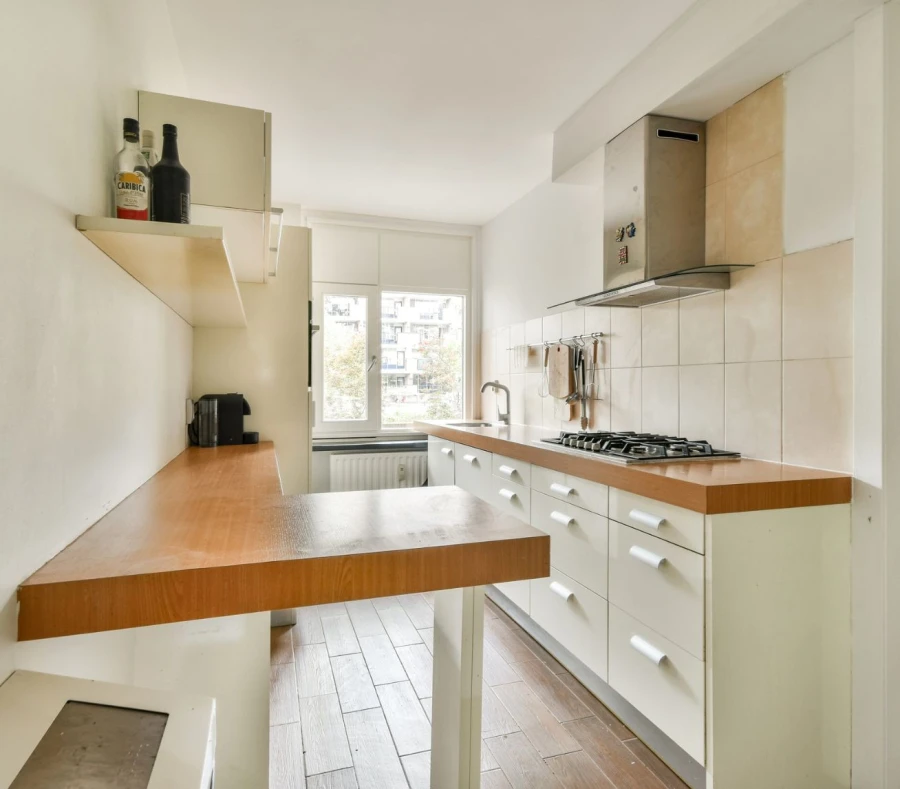
Visual clutter shrinks a room. The simpler the visual lines, the more open and breathable the space will feel. To this end:
Choose simple hardware in lighter metals or warm finishes
Avoid overly busy patterns on cabinetry or flooring
Keep countertops clear – store appliances behind cabinet doors if possible
Even the colour of handles and tap ware affects perception. Light brass, polished chrome or warm nickel keep the tone bright and cohesive.
10. Add Life: Plants, Textiles and Small Décor
Small touches (as long as they aren’t cluttered) can create an impressive difference in perception. Here are a few carefully chosen accents that add personality without compromising the sense of openness:
A trailing plant near a window warms the space
A light rug or runner brings texture without darkness
Thoughtfully placed ceramics and pottery soften the shelves and corners
The key is intentional decoration – pieces that feel curated rather than crowded.
Ready to Brighten Your Kitchen?
Dark, small kitchens aren’t design dead ends – they're invitations to think creatively. With the right combination of colour, light, layout and materials, you can change a compact kitchen into a space that feels bright, open and full of possibility.
Every tweak, from reflective tiles to thoughtful lighting, adds up, making your kitchen not just look bigger but feel better to live in.
Here’s to making even the cosiest kitchen feel airy, welcoming and wonderfully yours.