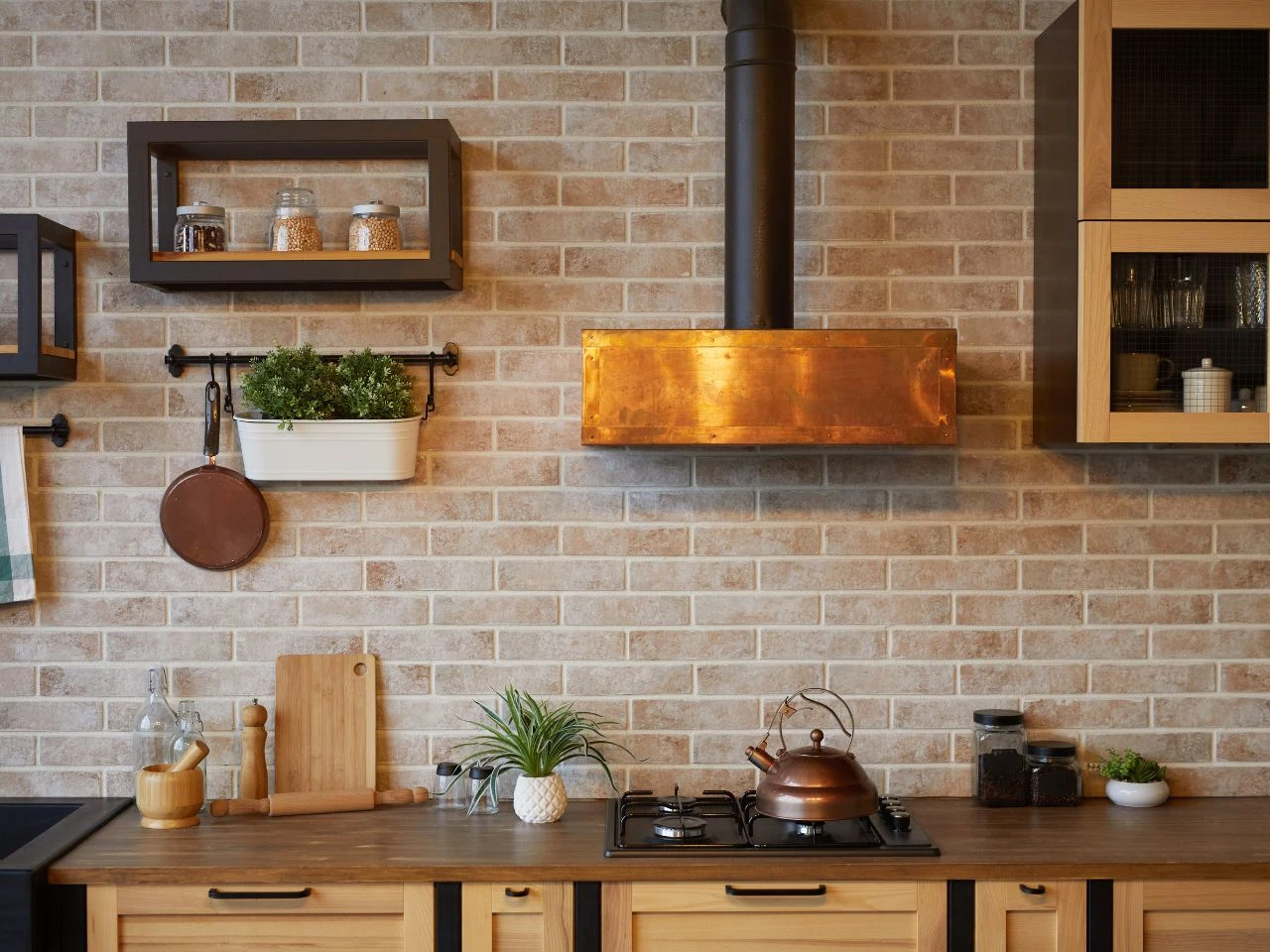
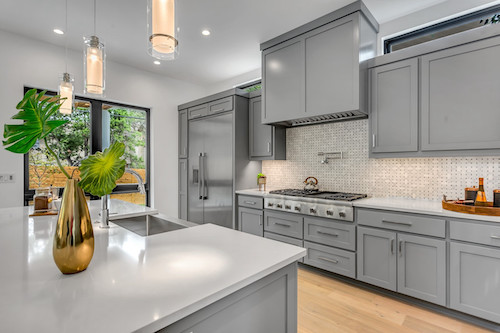
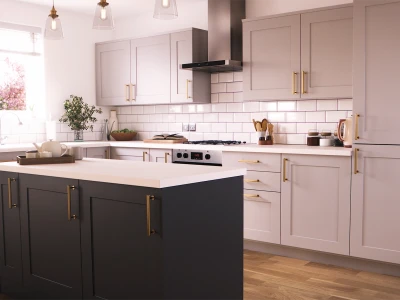
Your kitchen isn’t just where dinner gets made - it’s the space that holds the most shared moments between your loved ones. Morning sunlight, buzzing family breakfasts, afternoon baking, cosy evening catch-ups - it’s a space that holds every kind of moment. And nothing shapes the atmosphere more than lighting.
The right glow can make colours look richer, corners feel calmer, and the whole room feel warmer and more intentional.
Thoughtful kitchen lighting isn’t just practical; it’s what transforms a good kitchen into one that feels alive, inviting, yours. Whether you’re planning a full remodel or simply want your space to feel more polished, the truth is, layered lighting is the secret to getting it right.
Why layered lighting matters
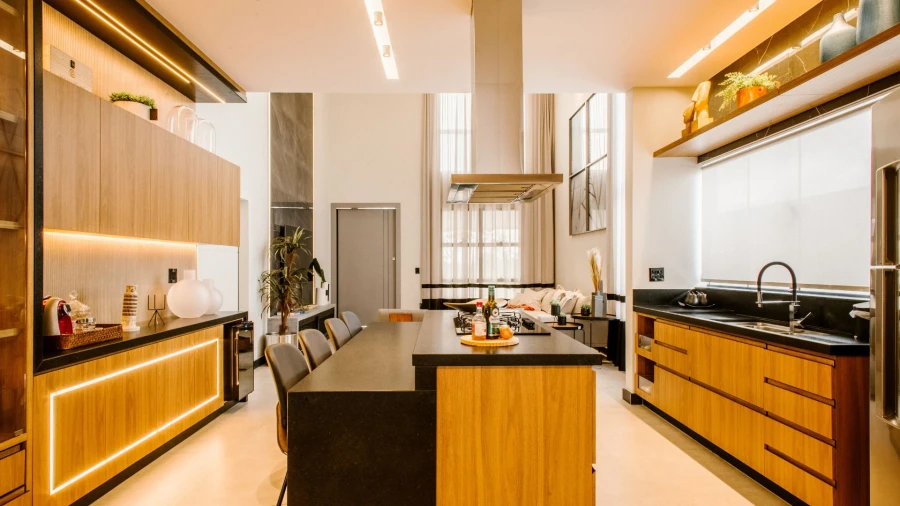
Lighting in a kitchen isn’t just about flicking on the ceiling light and calling it a day (or night). It’s about building layers that make the space work for everything you do, whether that’s prepping a meal, hosting friends, or quickly grabbing a quiet late-night snack.
There are three main types of lighting to consider, each serving a different purpose but working together to create balance:
Ambient lighting - This is your general, overall light. Think ceiling pendants, recessed downlights, or track lighting that fill the room with consistent brightness. Ambient light sets the tone and ensures there are no gloomy corners where crumbs can hide.
Task lighting - This is the practical layer, focused exactly where you need some extra light, like under-cabinet LEDs illuminating your worktops, or directional spotlights over the sink and hob. Without this layer of light, even the most beautiful kitchen can be frustrating to use.
Accent lighting - The finishing touch. These are the softer, more decorative lights that add depth and atmosphere - LED strips under shelves, pretty pendant lights over a kitchen island, plinth lighting at floor level, or even inside glass-fronted cabinets.
Get the balance right and you can instantly shift the mood of your kitchen, every time you flip a switch. Brighter, cooler light makes cooking and cleaning efficient and energising. Dimmed or warmer lighting in the evening turns the same space into a relaxed social area.
Skipping this layered approach often leaves a kitchen feeling flat, shadowy, or sterile. But when you layer thoughtfully (and preferably add dimmers or smart controls), your lighting becomes flexible, dynamic, and can genuinely transform your kitchen. It’s the difference between a kitchen that’s purely functional and one that feels effortlessly inviting, whatever the moment calls for. So, let’s dive into how you can achieve the perfect balance:
1. Start with strong ambient lighting
Your base layer of light needs to be even and bright enough to illuminate the whole room. Think ceiling-mounted downlights, flush LED panels, or a dramatic central fixture if you have the height. Ambient lighting should be considered as foundational - don’t wait until all the other bits are in place before sorting this out.
Tip: Choose LEDs with a warm white colour temperature (around 2700-3000 K) so that when you switch off task lighting, your kitchen still feels welcoming, not hospital-bright.
2. Add smart task lighting where you really need it
Cutting, peeling, chopping, and all the rest of those knife-involving tasks need good light, right? So here’s where the magic happens: illuminating the exact places you work.
Under-cabinet strips, pendant kitchen island lighting, and downlights over prep surfaces make a big difference - here’s how:
Under kitchen cabinets brighten the worktop and reduce shadows.
Pendants over islands or breakfast bars add character and function.
Think about the sink zone too - task lighting around the sink and stove is often under-considered.
Tip: Make sure task lights are on their own switch or dimmer so you can adjust them independently of the main lighting.
3. Use accent lighting to frame and elevate
Accent or feature lighting gives your kitchen personality. A stylish light fixture over your dining table, plinth lighting beneath lower cabinets, or a soft glow inside open shelving can turn your kitchen space from purely functional to super attractive.
Tip: Use accent lighting to highlight features, like glass cabinets, decorative backsplashes or even some art. It can pull the whole room together.
4. Choose fixtures (and bulbs) that match your style
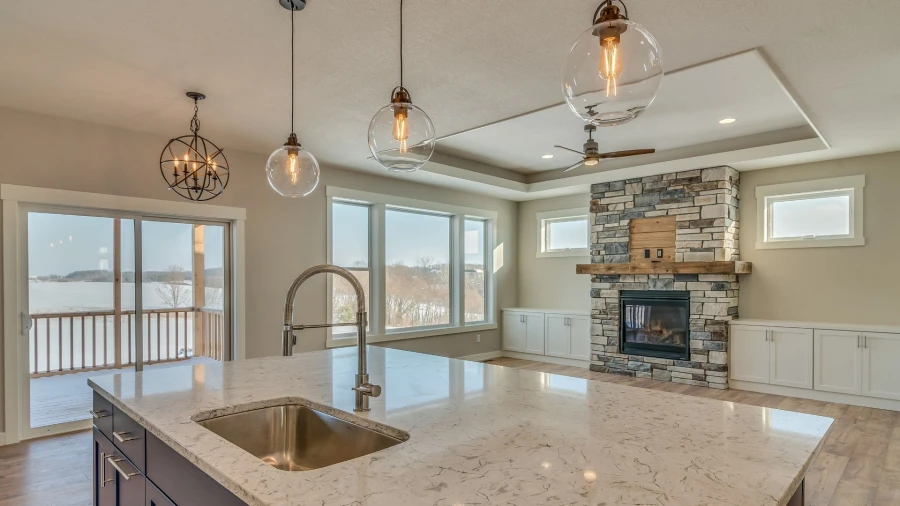
Your lighting choices say just as much about your kitchen’s personality as your cabinets, handles, or worktops. The trick is to choose fixtures that feel intentional - that belong in the space.
If your kitchen has an industrial edge, black wire pendants, matte finishes, and exposed bulbs add character and drama. For something softer, brushed brass or glass pendants suit a modern classic or Scandi-inspired space. Meanwhile, minimalist kitchens often shine brightest (literally) with slimline LED strips and flush spotlights that keep lines clean and uninterrupted.
And don’t forget the bulbs themselves. The colour temperature you choose will set the tone:
Warm white (2700 - 3000K) creates a cosy, welcoming feel perfect for evening dining.
Neutral white (3500 - 4100K) gives a crisp, clear, direct light ideal for cooking and prepping.
Cool white (5000K+) can feel more clinical and is best used sparingly, or in very modern, high-gloss designs.
Pro Tip: Stick to one colour temperature across the whole room so your lighting feels consistent and cohesive rather than patchy or mismatched.
5. Don’t forget the “rule of three”
It sounds simple, but this one rule can make or break your kitchen’s design. The “rule of three” keeps visual balance in check (odd numbers tend to feel more natural and pleasing to the eye).
So, if you’re hanging pendants over a kitchen island or breakfast bar, go for three evenly spaced lights instead of two or four. This creates a rhythm and symmetry that feels deliberate, not accidental.
Pro Tip: Keep around 70 - 80cm between the countertop and the bottom of your pendant for ideal height - low enough to create intimacy, high enough to stay practical.
6. Size and placement matter more than you think
We know they say that size doesn’t matter, but this good old classic just doesn’t work when it comes to lighting. Lighting that’s too small looks lost; lighting that’s too large overwhelms the space. So a good rule of thumb is to choose pendant diameters that are about one-third the width of your island or table.
Placement is equally important. Make sure your downlights are positioned so as to avoid casting shadows over work areas - align them in front of cabinet doors, not directly above your head. Over-sink lighting, too, can be one of the most satisfying additions when done right.
Pro Tip: In smaller kitchens, don’t shy away from statement fixtures - just scale them appropriately. A single sculptural pendant can double as art and light source.
7. Think beyond the ceiling
Most of us default to overhead lights, but some of the best kitchen lighting ideas live at eye level or below. Wall lights/sconces, shelf lighting, and plinth lights (at floor level) can add depth and make the room feel layered and inviting.
Wall-mounted lighting works beautifully above open shelving or coffee nooks, highlighting favourite mugs, cookbooks, family pictures or art. Meanwhile, plinth lighting adds a subtle, hotel-like glow that makes the kitchen feel warm and softly illuminated after dark.
Pro Tip: Try motion-sensor plinth lighting for late-night wanderers - practical, atmospheric, and energy-efficient.
8. Plan for natural light and smart circuits early
If you’re renovating or refreshing your kitchen, don’t wait until the end to think about lighting. Wiring, switch placement, and natural light mapping are decisions that can dramatically affect how well your lighting performs.
So, take note of where the sun hits your kitchen throughout the day, especially if you have skylights, large windows, or glazed doors. You can then balance this with artificial lighting that compensates for darker corners or evening hours.
Zoning your lighting (for example, separate switches for task, ambient, and accent lighting) gives you a lot of flexibility - bright and efficient when needed, cosy and subdued when you want to wind down.
Pro Tip: Add dimmers or smart lighting controls early in the design process, not as an afterthought. They’re inexpensive but make your lighting feel tailored and premium.
9. Choose energy-efficient, long-lasting options
LED lighting isn’t just the modern standard - it’s the smarter choice. It uses up to 80% less energy than traditional bulbs, lasts much longer, and generates less heat (ideal in cooking spaces). And while energy efficiency used to come only in bright, cold white, it now comes in a range of options, so you can still create a cosy atmosphere.
Opt for quality LEDs with good CRI (colour rendering index), ideally 80 or above, so your paint colours, cabinetry, and even food look their best under the light. If you’re placing lights near sinks or hobs, choose fittings rated for moisture resistance (look for IP44 or higher).
10. Set the mood with dimmers and zones

Finally, the magic: flexibility. The most luxurious kitchens aren’t necessarily the biggest or most expensive - they’re the ones that adapt. Dimmers and lighting zones allow you to create different moods at the touch of a button.
Think brighter, cooler lighting for meal prep and cleaning, and warm, low light for a dinner party or evening glass of wine. Just a few well-placed circuits and dimmable bulbs can completely change how your kitchen feels throughout the day and night.
Pro Tip: Try combining under-cabinet lights and plinth lighting as your “evening mode” - soft, indirect, and effortlessly relaxing.
Ready to change your kitchen lighting scheme?
Lighting isn’t just a finishing touch - it’s what brings your kitchen to life, literally. From layered light planning and perfect fixture placement to the choice between modern ceiling lights and low-hanging pendants, every decision shapes how you use and experience the space.
Whether you’re designing from scratch or updating your kitchen for 2026, think of lighting as your secret design tool: it enhances mood, boosts functionality, and makes every surface shine a little brighter.
With thoughtful planning (and a few smart bulbs), you can turn even the simplest kitchen into a space that feels both beautiful and brilliantly practical.