Are you a DIY enthusiast ready to tackle a kitchen installation? While it may seem like a straightforward project, fitting a kitchen yourself is a huge task that requires skill, precision, and experience.
It’s not just about installing cabinets – there are hidden costs, time commitments, and challenges that many DIYers overlook.
If you’re looking to refresh your space without the hassle, replacing just your kitchen cupboard doors could be a much easier and more cost-effective solution.
But if you decide to go the full DIY route, it’s essential to understand the complexities involved – we talk all about them below.
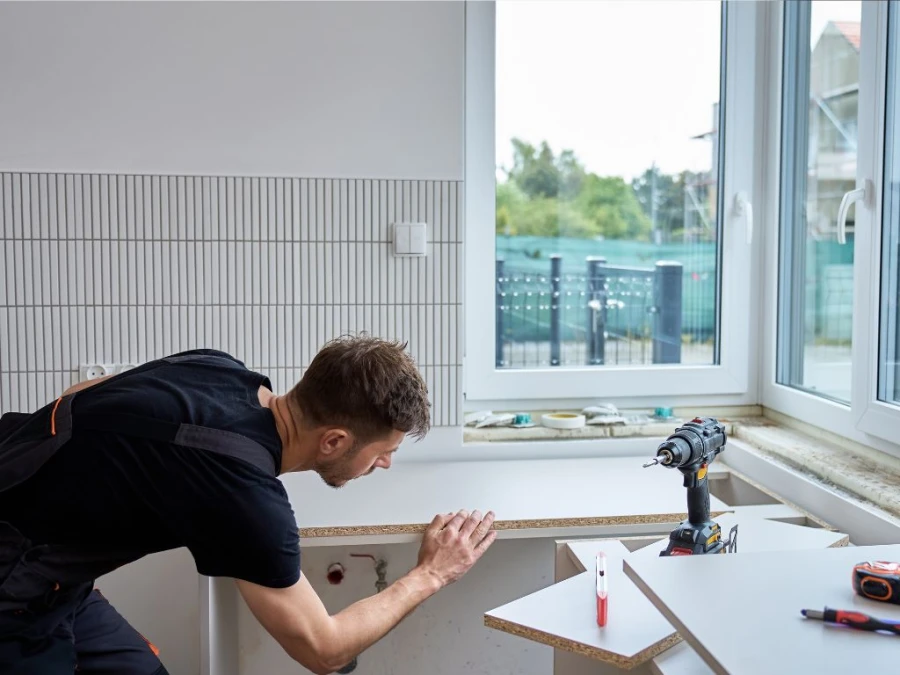
The realities of DIYing a kitchen fit
We've put together a comparison table that showcases the differences between fitting a kitchen yourself and hiring a professional to replace your wall units. Hopefully, it helps in making an informed decision about fitting your kitchen.
| Aspect | Fitting a kitchen yourself | Using Kitchen Magic's service |
|---|---|---|
| Cost | Cheaper if you buy poor quality parts will need replacing later on | Cheaper than a full kitchen refit |
| Time | Can take weeks or months, especially if you're not an experienced kitchen fitter | As little as a day |
| Expertise | You should have some DIY experience | All our kitchen fitters are qualified and experienced |
| Quality | Not likely to have the perfect, polished feel | High quality ranges available |
| Stress | Can be very stressful | No stress, no having to live without your kitchen for a week! |
What DIYers wish they knew before fitting a kitchen themselves
If you’ve ever scrolled through any DIY forums, you’ll see a familiar story: confident beginners starting out strong, only to hit a wall – sometimes literally.
That’s the reality for most people who try to fit a kitchen themselves. It’s not about enthusiasm or ability; it’s about precision, equipment, and most importantly, experience. Here’s what real DIYers say caught them out:
Worktop joints and finishing
Even a half-millimetre misalignment on a solid worktop joint can leave gaps or uneven edges that ruin the look of an otherwise perfect kitchen. Professional fitters use specialist jigs, routers, and laser-level equipment to get a seamless finish.
Most homeowners wouldn’t have these in their arsenal – so that’s a £5,000+ tool investment they’ll never use again.
Tools and measurements
Many people underestimate how much specialist kit is needed. One user admitted, “With the right tools I would have had significantly fewer issues… both a table saw and a really good tile saw are a couple of things I rather needed.” For those without that level of equipment, mistakes can be costly and visible.
Electrics, plumbing, and gas
This is where most DIY projects grind to a halt. As one commenter warned, “If you’re moving plumbing, electrical or gas about, it gets a bit trickier – always get a gas engineer in for gas stuff.” Beyond safety concerns, poor installation can lead to leaks, electrical faults, or even voided insurance.
For reference, a gas engineer can set you back as much as £40 per hour.
Uneven walls and floors
Most UK homes aren’t perfectly square. That means your “simple” cabinet fit often turns into a frustrating battle of shims, levels, and filler strips. A professional fitter can spot and correct these issues before they become visible problems.
Time and frustration
By the time you’ve measured, cut, levelled, adjusted, and re-adjusted, many DIYers find they’ve spent nearly as much as hiring a professional – minus the peace of mind.
How long would it take to fit a kitchen by myself?
Refitting a kitchen sounds straightforward, but many DIYers underestimate the time it actually takes to get the job done.
Between measuring, sourcing materials, making adjustments, and dealing with unforeseen issues, a DIY kitchen fit can easily turn into a much bigger time commitment than expected.
Here's a breakdown of what you can typically expect in terms of time when taking on this task yourself:
Planning & measuring: 1–2 days
(This includes getting accurate measurements, planning the layout, and ordering materials.)
Removal of old kitchen: 1–2 days
(Tearing out old cabinets, appliances, and countertops, along with clearing the space.)
Fitting cabinets & units: 3–4 days
(Time spent assembling and fitting the new units, including addressing any wall or floor irregularities.)
Worktop fitting & adjustments: 2–3 days
(Cutting, joining, and fitting worktops to suit the space, which may require adjustments for irregular shapes.)
Plumbing & electrical work: 1–2 days
(If you’re moving or installing new plumbing or electrics, this task often takes longer and may require a licensed professional.)
Final touches (e.g., tiling, trimming, etc.): 2–3 days
(Tiling, installing splashbacks, trimming edges, and doing finishing touches to ensure everything looks seamless.)
So, ultimately? It could take somewhere between 7 and 14 days to refit your kitchen yourself, depending on your experience and the complexity of the job.
However, this is often just an estimate. Issues like misaligned cabinets, lack of proper tools, and delayed deliveries can push the timeline even further. Add to that the need for rework, and what initially seemed like a weekend project could stretch into weeks of frustration.
The average DIYer may need to redo tasks, wait for tool rentals, or spend hours troubleshooting issues.
By the time the kitchen’s in place, you might find yourself frustrated, and any potential savings may be lost in time spent. Plus remember that your kitchen will be out of use within this time period.
With Kitchen Magic, we take care of everything, so you don’t have to lose valuable time. Our skilled professionals can complete the job in less time, with no mistakes or backtracking.
How much does it cost to fit my own kitchen?
When it comes to fitting a kitchen, the initial costs can seem straightforward. However, both DIY and professional options come with their own hidden costs that can add up quickly.
DIY kitchen fitting costs
Materials & tools: While you can save on labour, buying the necessary tools (drills, saws, levels) and materials for a DIY kitchen can quickly add up. You might spend £500–£2,000 on tools, plus the cost of cabinets, worktops, and fittings.
Time investment: DIY kitchen renovation could take you anywhere from 7–14 days, depending on experience, which is valuable time away from other tasks or work.
Hidden costs: Mistakes like misaligned units, plumbing errors, or poor finishes could lead to additional costs for rework or repairs. These can run anywhere from £100–£500 or more.
Professional kitchen fitting costs
Professional labour: Hiring a professional kitchen fitter generally costs between £300–£500 per day, depending on your location and the complexity of the job. A full installation may cost £1,500–£5,000+ for a complete kitchen.
Time savings: A professional installer can typically complete the job in 4–5 days, saving you significant time and stress.
Hidden costs: With professionals, hidden costs are often minimal, as they bring experience and tools to the job, reducing the likelihood of errors. They can also manage trades like plumbing and electrical work, ensuring safety and compliance.
Let’s see all of them together:
| Cost Factor | DIY Kitchen Fitting | Professional Kitchen Fitting |
|---|---|---|
| Materials & tools | £500–£2,000 for tools and materials | Included in the overall installation cost |
| Labour | Free, but significant time investment (7–14 days) | £300–£500 per day for skilled professionals |
| Time investment | 7–14 days (potential delays due to mistakes) | 4–5 days (completed with efficiency) |
| Potential hidden costs | £100–£500+ for corrections and repairs | Minimal, as professionals avoid costly mistakes |
| Plumbing & electrical work | Additional cost for hiring licensed tradespeople | Handled by the professional fitter (often included) |
| Quality assurance | Depends on skill level, may result in subpar finish | High-quality, guaranteed finish with experience |
| Stress & frustration | High, especially if things go wrong | Low, as professionals manage the process |
Fitting your own kitchen requires a wide range of tools and equipment (some of which we’ve already discussed) to make sure the job is done properly.
Here’s a comprehensive (but not exhaustive, as every kitchen is different) list of the essential items you’ll need, and a few reasons why each is crucial for a successful DIY kitchen fit:
Drill: A good-quality drill is essential for drilling holes in cabinets, worktops, and walls. You’ll use it for everything from installing screws to mounting heavy units and fixtures. You may need both a corded drill for continuous power and a cordless one for ease of movement.
Screwdrivers: Having a set of screwdrivers with various head types (flathead, Phillips) will help with fixing brackets, attaching doors to cabinets, and many other tasks that require precision. A drill with screwdriver bits can save you a lot of time.
Lump hammer & claw hammer: A lump hammer is used for driving in large nails or adjusting heavy-duty items (like worktops or cabinets) into place. The claw hammer will help with tasks like removing nails or prying apart pieces during the fit.
Spirit level: This tool is essential to ensure your cabinets and countertops are properly aligned and level. Without it, your kitchen could end up looking uneven, leading to doors that don’t close properly or worktops that slope.
Pliers: Pliers come in handy for a variety of tasks, from tightening nuts and bolts to bending or cutting wires (especially if you’re dealing with plumbing or electrical work).
Circular saw: A circular saw is perfect for cutting through thicker materials like MDF, plywood, or worktops. If you’re working with larger pieces of wood or solid surfaces, a circular saw will make your life much easier compared to using a hand saw.
Jigsaw: If you need to make curved or intricate cuts (like for sinkholes in worktops or fittings around pipes), a jigsaw is the ideal tool. It allows for more precision and control when making detailed cuts.
Tape measure: Accurate measurements are crucial to fitting a kitchen correctly. A tape measure allows you to measure walls, spaces for cabinets, and worktops, ensuring everything fits together perfectly.
Marker pens: You’ll need these for marking cut lines, positions for holes, and placement of units. A marker pen ensures that you can make quick, accurate markings that are easily visible during the fit.
At least one coat of paint: After all the hard work, your kitchen will need a fresh coat of paint, especially if you’ve removed old units or exposed any raw areas. Make sure you have the right paints for wood, walls, and surfaces to give everything a polished, finished look.
While these tools are the basics, depending on your kitchen layout and the complexity of your project, you may also need specialised equipment like a tile cutter, cabinet clamps, or a router.
But even with all these tools, the challenge of getting everything level, plumb, and properly fitted remains the biggest hurdle.
So, can you fit a kitchen yourself?
Yes you can fit a kitchen yourself technically, but you could be far better off replacing your kitchen cupboard doors instead.
Choose a kitchen fitting service instead of a DIY kitchen

You can choose a kitchen fitting service instead to install your kitchen door fronts and your kitchen worktop choices. At Kitchen Magic, we replace your existing kitchen units with beautiful new ones.
That's all part of our kitchen makeover service - and it could be done within a day! We only replace your old units with new door fronts. We don't fit any new flooring, install any new appliances or implement any gas work.
What factors should be considered when choosing a kitchen fitter?
Experience
When choosing a kitchen company, the first thing to consider is their experience. You want to make sure that they have a good track record of fitting kitchens and have the necessary skills to complete the job to a high standard.
Ask for references or photos of previous work they have done to get an idea of their capabilities. Head to our testimonials and before / after
Communication
Communication is key when working with a kitchen fitter. You want someone who is responsive and easy to get hold of.
Make sure you have a clear understanding of what the job entails and what your expectations are. A good fitter will be able to advise you on the best options for your space and budget.
Qualification
Finally, make sure the fitter is properly insured and licensed. This will give you peace of mind that you are working with a professional who is qualified to do the job.
Don't be afraid to ask for proof of insurance and licensing before hiring a fitter.
Our kitchen fitters can quote and install them - the doors and drawer fronts can be replaced in as little as a day.
Browse our kitchen door fronts below. Some of our most popular ranges are below for you to see. We've popped some images below in the same order for your inspiration.

You may also like: